
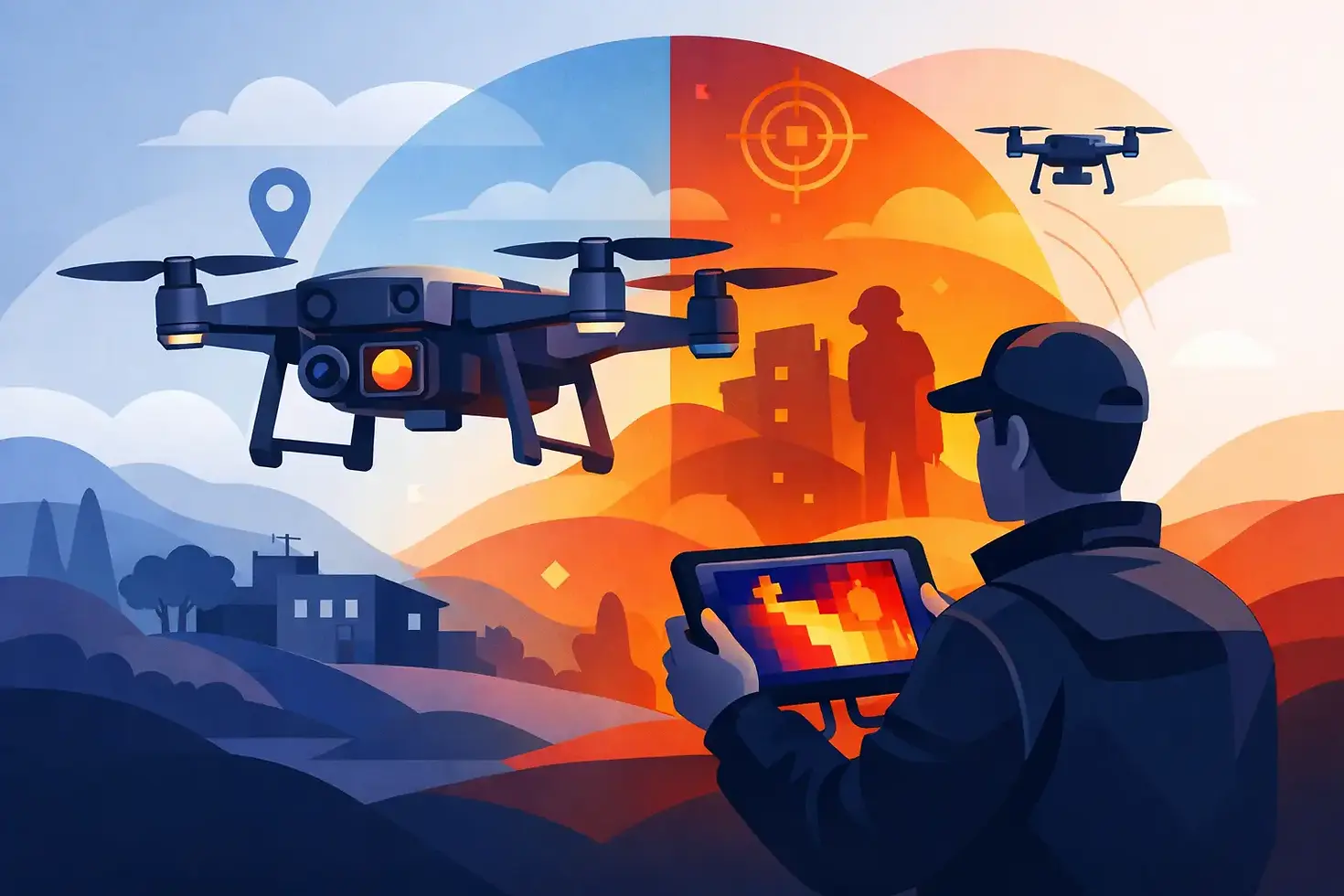
How to Use Thermal Drones the Right Way
A roof can look fine from the street and still hide trapped moisture, heat loss, or failing components. A field can appear uniform in daylight while sections are already under stress. That is where knowing how to use thermal drones matters. Thermal imaging gives you a different layer of information, but useful results do not come from simply launching a drone and looking for bright spots.
The real value comes from planning the mission, understanding what the sensor is actually seeing, and matching the flight to the job. For property owners, facility managers, farmers, and public safety teams, thermal drone work is less about dramatic imagery and more about decision-making. When done correctly, it helps you find issues faster, document them clearly, and act with more confidence.
What thermal drones actually detect
A thermal drone does not see "through" materials, and that misconception causes plenty of bad decisions. It measures infrared radiation from surface temperatures. In practical terms, the camera shows temperature differences across what it can see on the surface, not hidden conditions directly.
That distinction matters. A hot electrical connection may indicate resistance or overload. A cooler roof area may suggest trapped moisture because wet materials often heat and cool at different rates than dry ones. In search operations, a person may stand out against cooler terrain, but weather, clothing, vegetation, and ground temperature all affect visibility. Thermal imaging is powerful, but it is still interpretation, not magic.
How to use thermal drones for real-world results
The first step is to define the outcome before the aircraft leaves the ground. If the job is a commercial roof inspection, you are looking for thermal patterns that support further evaluation of moisture intrusion, insulation issues, or membrane defects. If the mission is agricultural, you may be tracking irrigation inconsistency, plant stress, or animal location. If the operation supports emergency response, the priority may be rapid situational awareness rather than a perfect map.
That is why flight planning changes by industry. A real estate team may want thermal overlays that help explain energy loss to a homeowner. An infrastructure manager may need repeatable flight paths for maintenance records. Law enforcement or search crews may need speed, coverage, and safe coordination with other responders. The best thermal drone workflow is the one built around the operational question.
Start with the right time of day
Timing has a direct effect on image quality. For roof inspections, early evening or pre-dawn can be ideal because the roof has had time to absorb or release heat, making anomalies easier to distinguish. Midday sun often creates noise from solar loading, especially on dark roofing materials. In agriculture, early morning flights can help reveal moisture and plant temperature variation before the day evens things out.
Search and rescue is more complicated. A cool night may improve contrast between a person and the terrain, but dense canopy, rocks that hold heat, and warm pavement can all reduce clarity. There is no single perfect window. The right time depends on the surface, weather, and what you need to detect.
Pay attention to weather and environment
Thermal performance drops when operators ignore environmental factors. Wind can cool surfaces and change thermal signatures. Rain, fog, and high humidity can reduce image clarity. Reflective surfaces such as metal roofs, glass, and water can create misleading readings. Even recent cloud cover can affect what you see.
This is why experienced operators do not treat thermal imagery as a one-pass answer. They compare thermal patterns with site conditions, visible-light images, and the known behavior of the material being inspected. The camera gives evidence, but context gives meaning.
Equipment setup matters more than most people expect
A capable thermal payload is only part of the equation. Sensor resolution, temperature sensitivity, lens choice, and radiometric capability all affect whether the data is useful. For some jobs, a lower-resolution sensor may be enough to identify broad heat patterns. For detailed inspections of electrical assets or roofing features, better resolution can make the difference between a useful report and a vague image.
Calibration also matters. Operators need to confirm proper camera settings, verify battery health, and make sure both visible and thermal sensors are recording correctly if the system supports dual capture. Small setup errors become expensive once you have left the site.
Fly for data, not just for coverage
A common mistake is flying too high or too fast. Broad coverage may look efficient, but thermal inspections often depend on detail. Altitude should match the target size and the level of evidence the client needs. A solar array survey, for example, may need a different flight profile than a missing-person search over open terrain.
Overlap, angle, and speed should also support interpretation. Straight-down mapping works for some applications, while oblique views are better for facades, tanks, stacks, and elevated equipment. If the goal is comparison over time, repeatability becomes just as important as image quality. Consistent altitude, route, and time of day allow more reliable trend analysis.
Reading thermal images without overcalling the problem
Interpreting thermal imagery is where discipline matters most. A hot area does not always mean failure. A cool area does not always mean moisture. Thermal anomalies point to areas that deserve attention, testing, or maintenance review.
For example, on a flat roof, a cooler patch after sunset may suggest moisture below the membrane because wet insulation retains heat differently. But shadows, repairs, material changes, and drainage conditions can create similar patterns. In electrical inspections, an overheated component may indicate load imbalance, corrosion, or a loose connection, but the image should be evaluated alongside system conditions and visual evidence.
This is where professional reporting adds real value. A good thermal drone operation does not hand over screenshots and call it finished. It documents flight conditions, notes likely causes, flags priority findings, and presents imagery in a way decision-makers can use.
Safety, compliance, and mission discipline
Thermal drone work often happens in environments where mistakes carry real consequences - active job sites, public infrastructure, damaged property, or emergency scenes. Safe operations start with airspace review, weather checks, site hazard assessment, and a clear understanding of who controls the scene.
In public safety and emergency response, thermal drones are especially effective when they support a larger command structure. That means coordinated communications, clear tasking, and a pilot who understands the difference between collecting imagery and contributing to an operation. Speed matters, but so does discipline.
For commercial and residential clients, compliance and professionalism are just as important. Licensed, insured operators reduce risk. A structured workflow protects both the client and the quality of the final product. That standard is part of why organizations choose experienced providers instead of treating thermal work like a basic drone add-on.
When thermal drones work best - and when they do not
Thermal drones are excellent for roof inspections, solar panel assessments, electrical reviews, livestock monitoring, water stress detection, hotspot identification, and search support. They are especially useful when the target is hard to access, time-sensitive, or spread across a large area.
They are less effective when people expect them to see through walls, ignore weather, or replace every other inspection method. Sometimes a thermal flight is the fastest way to narrow a problem area, and sometimes it needs to be paired with moisture meters, ground inspection, or maintenance records. The smartest use of thermal drones is not forcing them into every job. It is knowing when they add clarity and when they need support from other tools.
A practical standard for better thermal operations
If you want reliable results, keep the process simple and disciplined. Define the objective. Fly at the right time. Match altitude and camera settings to the target. Record visible and thermal imagery when possible. Interpret anomalies carefully. Deliver findings in a format people can act on.
That approach works whether the mission involves a farm, a commercial roof, a power asset, or a search perimeter. It is also the standard serious operators bring to every job. At Gods Eye Drone, that means combining certified flight operations, thermal imaging experience, and mission-first execution to deliver information that is useful in the field, not just impressive on a screen.
Thermal drones are at their best when they reduce uncertainty. If the goal is faster decisions, safer inspections, or better visibility where the ground view falls short, the right flight can give you exactly that.


Comments