
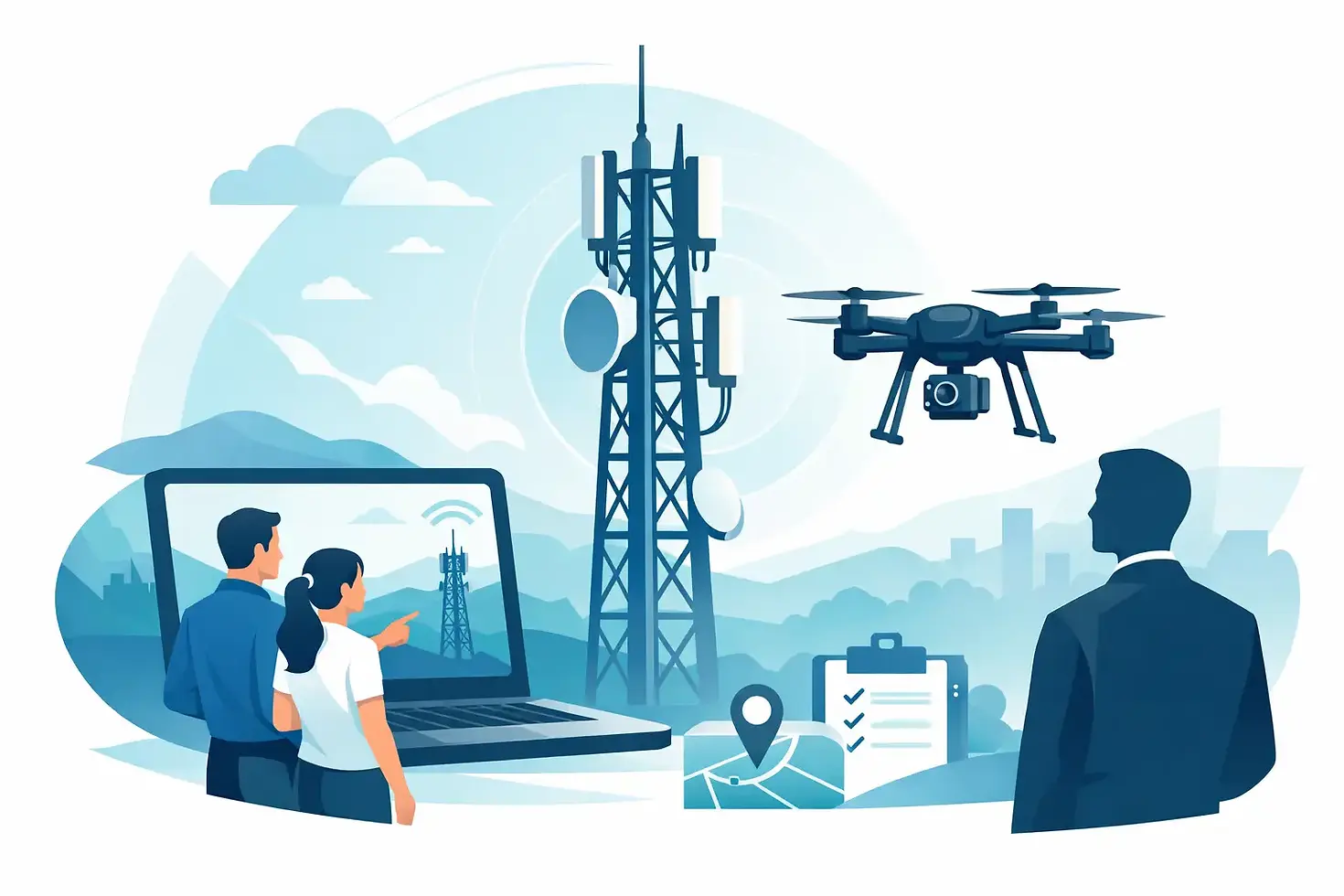
Choosing a Tower Inspection Drone Company
- Apr 29
- 5 min read
A cell tower outage rarely starts with a dramatic failure. More often, it begins with a loose mount, a hairline crack, corrosion at a connection point, or a component that took one storm too many. By the time those issues are visible from the ground, the repair window may already be narrowing. That is why hiring the right tower inspection drone company matters. You are not just buying aerial images. You are paying for safe access, accurate documentation, and decisions backed by evidence.
What a tower inspection drone company actually does
A qualified tower inspection drone company provides more than a pilot and a camera. The real value is in how the mission is planned, flown, documented, and translated into useful findings. For tower owners, telecom contractors, utilities, municipalities, and infrastructure managers, that distinction matters.
Drone inspections give teams a way to evaluate structures without sending a climber up for every routine review. That can reduce exposure to risk, shorten inspection timelines, and create a visual record that is easier to compare over time. On communication towers, drones can capture high-resolution imagery of antennas, mounts, lines, platforms, lightning protection systems, and visible structural wear. On other vertical assets, they can help identify corrosion, cracking, loose hardware, vegetation encroachment, storm damage, and heat anomalies when thermal imaging is appropriate.
The key phrase there is when it is appropriate. Not every issue can be confirmed by a drone alone, and a credible provider will say so. Some defects still require hands-on verification, specialized testing, or engineering review. Good drone inspections do not replace every traditional method. They improve how quickly you spot problems, prioritize repairs, and document conditions before crews are deployed.
Why tower inspections are a good fit for drones
Tower work is high-risk by nature. Access is difficult, weather can shift fast, and even a straightforward visual inspection can consume time and resources. Drones change that equation because they can reach elevated viewpoints quickly while keeping more personnel on the ground.
That speed is only useful if the imagery is precise enough to support action. A professional operator should know how to hold stable positioning near complex structures, manage lighting angles, and capture the same components from consistent perspectives. If the inspection is rushed or poorly framed, you may end up with impressive footage that does very little for maintenance planning.
There is also a documentation advantage. When a drone mission is executed correctly, the inspection produces a timestamped visual record that can support maintenance logs, insurance questions, contractor coordination, and trend analysis over multiple inspections. For tower owners managing several sites, that record becomes even more valuable because it helps standardize how conditions are assessed.
How to evaluate a tower inspection drone company
The first thing to look for is operational discipline. Towers are not forgiving environments, and there is a difference between general drone photography and infrastructure inspection work. A company that handles tower inspections should be able to explain its flight planning process, airspace compliance, safety procedures, insurance coverage, and what steps it takes to avoid interfering with ongoing site operations.
Experience matters, but so does the kind of experience. A provider may have thousands of flight hours and still lack the inspection mindset required for critical infrastructure. You want a team that understands how to collect evidence, not just content. That includes close visual captures, repeatable angles, defect-focused imaging, and reports organized around decision-making rather than aesthetics.
Equipment should match the mission. High-resolution visual sensors are standard, but some projects benefit from thermal imaging, zoom capabilities, or AI-supported analysis workflows. Even then, more technology is not always better. The best provider is the one that can explain what tools are useful for your asset, what those tools can realistically detect, and where their limits begin.
Communication is another test. If a company cannot clearly explain what you will receive after the flight, that is a red flag. Before any mission begins, you should know what deliverables are included, how findings will be presented, whether imagery will be labeled by tower section or component, and how quickly reporting will be turned around.
What good inspection reporting looks like
A strong report does not bury you in screenshots. It organizes observations in a way that helps your team act. For example, if a tower leg shows corrosion, the report should identify the location, provide clear imagery, note the apparent severity, and distinguish between observed conditions and assumptions. If thermal imaging is used, the report should explain what heat patterns may indicate and where additional verification may be needed.
This is where many providers separate themselves. Flying the mission is only half the job. The other half is turning raw imagery into something your operations team, maintenance contractor, engineer, or insurer can actually use. That means clean labeling, logical structure, and enough context to support next steps.
The best reports also make comparison easier over time. If inspections are performed annually or after major weather events, consistency in image capture and reporting format helps teams track deterioration, confirm repairs, and spot recurring trouble areas.
The trade-offs to keep in mind
Drone inspections offer major advantages, but they are not magic. Weather can delay flights. Wind, glare, and signal conditions can affect image quality. Dense tower configurations and surrounding obstructions can limit access to certain angles. In some cases, regulatory or site-specific restrictions may shape what can be flown and when.
There is also the question of depth. A drone can reveal visible damage and potential problem areas, but it may not confirm every underlying cause. A discolored component might point to heat stress, moisture intrusion, or material failure, but final diagnosis may still require a technician or engineer. A trustworthy company will frame its findings carefully and avoid overselling certainty.
Cost should be viewed the same way. The cheapest option can become expensive if the imagery is incomplete, the report is vague, or the provider has to return to recapture missed areas. On the other hand, the highest quote is not automatically the best. Value comes from safe execution, usable data, and the ability to support decisions without wasting time.
Who benefits most from hiring a tower inspection drone company
Telecom operators are the obvious fit, but they are not the only ones. Utility providers, municipalities, emergency communications teams, broadcast operators, and private infrastructure owners all have reasons to inspect vertical assets more efficiently. If your organization manages remote sites, aging structures, or towers exposed to frequent weather stress, drone inspections can improve visibility without slowing operations.
They are also useful after specific events. Following storms, lightning strikes, high winds, or suspected impact damage, drones can provide fast situational awareness before crews commit to climbing or repair work. That early look helps teams prioritize the most urgent sites and allocate resources where they matter most.
For organizations that need dependable field support, this is where a mission-oriented provider stands out. A company like Gods Eye Drone brings value not just through aircraft and sensors, but through disciplined execution, professional accountability, and a practical understanding of how aerial data supports real decisions in the field.
Questions worth asking before you hire
Ask how the company handles safety planning around active infrastructure. Ask what kind of reporting is included and request a sample if available. Ask whether thermal imaging is recommended for your use case or simply offered because it sounds advanced. Ask how they manage changing weather, restricted airspace, and site coordination.
Just as important, ask what a drone inspection cannot tell you. The answer will reveal a lot. Serious operators know the limits of their tools, and that honesty usually translates into better work.
A tower inspection is not just another content capture job. It is a field operation that needs precision, judgment, and follow-through. When the provider understands that, the result is more than a set of images. It is a clearer picture of asset condition and a faster path to the right next step.
If you are choosing a tower inspection partner, look for the company that treats your structure like critical infrastructure, not a photo opportunity. That standard tends to pay off long after the flight is over.


Comments