
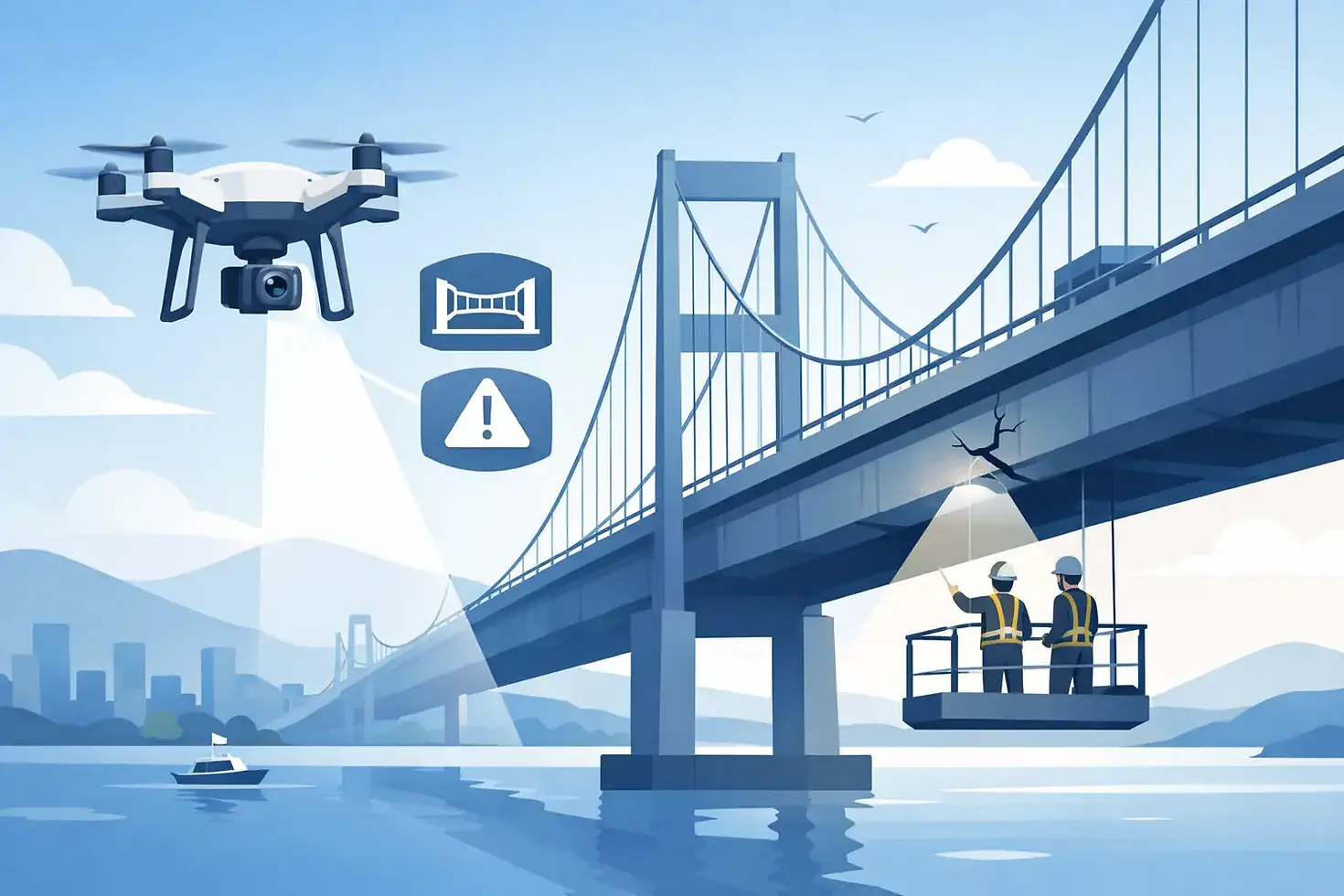
Bridge Inspection Drone Services That Cut Risk
A bridge does not fail all at once. It gives warnings first - hairline cracking, coating loss, joint wear, corrosion at connection points, moisture intrusion where it should not be. The problem is that many of those warnings show up in places that are hard, expensive, or dangerous to reach. That is where bridge inspection drone services have changed the job.
For infrastructure managers, engineers, municipalities, and contractors, the value is not novelty. It is better access, faster documentation, and fewer people exposed to avoidable hazards. A drone does not replace engineering judgment or hands-on structural assessment where required. What it does is give inspection teams a safer, sharper way to see what is happening before they commit crews, lane closures, lifts, or rope access.
Why bridge inspection drone services are gaining ground
Traditional bridge inspection methods still have a place. Under-bridge inspection units, lifts, climbing teams, and close visual review are often necessary for compliance and final determination. But they also come with real operational costs. Traffic control may be required. Equipment mobilization can be extensive. The work window may be short, especially on active roadways or in sensitive public areas.
Drone-based inspection gives teams a strong first look and, in many cases, a highly detailed inspection record that supports maintenance planning. High-resolution imagery can capture deck edges, bearings, piers, abutments, truss members, gusset plates, drainage features, and other components from angles that are difficult to document from the ground. That matters when the goal is not just to spot a problem, but to create usable records for comparison over time.
The safety improvement is just as important. Reducing the need to place personnel in live traffic environments, over water, at height, or beneath aging structures is a practical win. In mission-critical work, risk reduction is not a marketing phrase. It is part of doing the job responsibly.
What drone inspections do well
The strongest bridge inspection drone services are built around actionable data, not just aerial footage. A qualified operator can collect detailed visual information that helps teams identify deterioration, verify known issues, and prioritize next steps.
Cracking, spalling, rust staining, exposed rebar, connection point corrosion, failed sealants, drainage blockages, and coating breakdown are all examples of conditions drones can often document clearly. Close-proximity flight also helps capture areas that are easy to miss from standard roadside viewpoints, especially on larger or more complex structures.
When thermal imaging is appropriate, it can add another layer of value. Thermal data may help reveal moisture patterns, delamination indicators, or temperature anomalies on certain surfaces and materials. That said, thermal is not a universal answer. Environmental conditions, surface composition, sunlight, and timing all affect results. Good operators know when thermal imaging is useful and when standard visual capture will provide better information.
Video can also help engineering and public works teams understand spatial relationships across the whole structure. A still image is excellent for documenting a defect. A well-planned video pass can show how that defect relates to nearby members, drainage paths, expansion joints, or traffic-facing elements. Both have a role when inspection findings need to be communicated clearly to decision-makers.
Where drones fit into the inspection process
The best use of drones depends on the bridge, the purpose of the inspection, and the level of detail required. In some cases, a drone is ideal for a preliminary condition assessment before scheduling more intrusive inspection work. In others, it supports routine documentation, post-storm review, or follow-up after repair.
For public agencies and asset managers, this matters because not every bridge problem deserves the same response. If a drone survey helps confirm that a concern is minor and stable, teams can avoid overcommitting resources. If it shows accelerated deterioration or a condition in a critical area, crews can move faster with better information.
This is where a disciplined flight plan makes the difference. Random footage is not an inspection product. A useful operation is mapped to structural components, environmental constraints, access limitations, and the reporting needs of the client. The operator needs to know what matters on a bridge and how to capture it consistently.
What to expect from professional bridge inspection drone services
If you are hiring for bridge work, aviation skill alone is not enough. You need a provider who understands that infrastructure inspection is operational work, not a casual photo session.
A professional process should start with planning. That includes reviewing site conditions, airspace, weather, traffic exposure, line-of-sight limitations, and the specific components that need inspection. It should also include coordination with the client on deliverables. Some teams need high-resolution stills organized by location. Others need annotated findings, thermal captures, video documentation, or imagery formatted to support engineering review.
Field execution should be controlled and repeatable. That means safe launch and recovery zones, disciplined aircraft positioning, careful stand-off distances, and attention to people, vehicles, and surrounding infrastructure. Bridges often create challenging flight environments due to wind funnels, GPS interference, overhead obstacles, and restricted approach paths. Experience matters here.
After the flight, data handling matters just as much. Images should be organized in a way that supports inspection review rather than forcing a client to sort through hundreds of files with no structure. Clear labeling, logical grouping, and consistent capture angles make it easier to compare conditions over time and brief stakeholders without wasting hours.
Trade-offs and limits to understand
Drone inspections are powerful, but they are not magic. If someone presents them as a total replacement for every traditional bridge inspection method, that is a red flag.
Some defects still require hands-on verification, material testing, or very close tactile assessment. Internal issues may not be visible from the exterior. Tight internal spaces, undersides with severe access constraints, and areas blocked by geometry may require supplemental methods. Weather can also affect scheduling, especially in high winds, rain, or poor visibility.
There are regulatory and site constraints as well. Airspace restrictions, nearby traffic, pedestrians, rail corridors, waterways, and utility lines all affect how a mission is planned. A capable provider accounts for those realities early rather than improvising on site.
The right question is not whether a drone can do everything. The right question is where a drone creates the most value in your inspection workflow. For many bridge owners and managers, that value shows up in better early detection, safer access, faster mobilization, and stronger documentation.
Choosing a provider for bridge inspection drone services
When the structure matters, credentials and operating discipline should carry more weight than flashy demo footage. Look for a provider who is properly certified, insured, and experienced in close-quarters infrastructure work. Ask how they handle mission planning, risk management, data organization, and coordination with engineers or public agencies.
It is also worth asking what kind of imaging they use and why. Not every mission needs the same payload or capture method. High-resolution visual imagery may be the priority on one bridge, while thermal support or repeated progress documentation may matter more on another. The right provider should explain the fit, not push a one-size-fits-all package.
Communication is another separator. Infrastructure clients need clear expectations on timing, flight windows, site requirements, and deliverables. A mission-ready operator respects those details because they affect budgets, scheduling, public safety, and decision-making. That is especially true when working around active transportation routes or time-sensitive maintenance planning.
For clients who need that level of professionalism, Gods Eye Drone approaches aerial operations with the discipline, precision, and accountability that high-value inspections demand. The point is not simply to get airborne. The point is to deliver usable intelligence that supports action.
Why this matters for long-term asset management
Every bridge owner is balancing time, budget, and risk. Deferred maintenance gets more expensive. Poor documentation slows decisions. Limited visibility leads to missed warning signs or unnecessary emergency responses.
Bridge inspection drone services help close that gap by making high-quality visual assessment more accessible and repeatable. They support condition tracking, maintenance prioritization, contractor coordination, and post-event review after storms, impacts, or seasonal wear. Over time, that record becomes valuable on its own. Trends are easier to spot when imagery is consistent and current.
For agencies and organizations responsible for public infrastructure, that is not just a technical advantage. It is a practical one. Better information supports better timing, better budgets, and better safety decisions.
If you are responsible for a bridge, the question is rarely whether inspection is necessary. The real question is how to get the clearest possible view with the least unnecessary risk. In many cases, the smartest first move is the one that puts better eyes on the structure before you put more people on it.


Comments